


<!-- WP QUADS Content Ad Plugin v. 2.0.92 -->
<div class="quads-location quads-ad15875 " id="quads-ad15875" style="float:none;text-align:center;padding:0px 0 0px 0;" data-lazydelay="0">
<amp-ad 
 width="100vw" 
 height="320" 
 type="adsense" 
 data-ad-client="ca-pub-4964358903113472" 
 data-ad-slot="7296948979" 
 data-auto-format="rspv" 
 data-full-width 
 > 
 <div overflow></div> 
 </amp-ad>
</div>
<p>There are around 35,000 commercial aircraft in the world, the majority of these are narrowbody jets. However, in recent years there has been a steady increase in turboprop planes.</p>
<p>Statistics show an increase in the delivery of turboprops. There are several reasons why airlines are focusing on turboprops. These include lower fuel costs on regional runs, and reduced emissions, helping companies reach climate change targets.</p>
<p>Perhaps the biggest reason is that turboprops offer operational flexibility. They fly where jets can’t.</p>
<!-- WP QUADS Content Ad Plugin v. 2.0.92 -->
<div class="quads-location quads-ad14936 " id="quads-ad14936" style="float:none;text-align:center;padding:0px 0 0px 0;" data-lazydelay="0">
<amp-ad 
 width="100vw" 
 height="320" 
 type="adsense" 
 data-ad-client="pub-4964358903113472" 
 data-ad-slot="3932419033" 
 data-auto-format="rspv" 
 data-full-width 
 > 
 <div overflow></div> 
 </amp-ad>
</div>

<p><img class="alignnone size-full wp-image-19783" src="http://25magazine.com/wp-content/uploads/2026/03/Screenshot-2026-03-09-at-09.09.43.jpg" alt="" width="876" height="1344" /></p>
<h2>Shorter Take-Offs</h2>
<p>One of the biggest advantages of turboprops is that they can take off (and land), on much short runways than jets. This is largely due to their smaller build and ability to fly at lower airspeeds.</p>
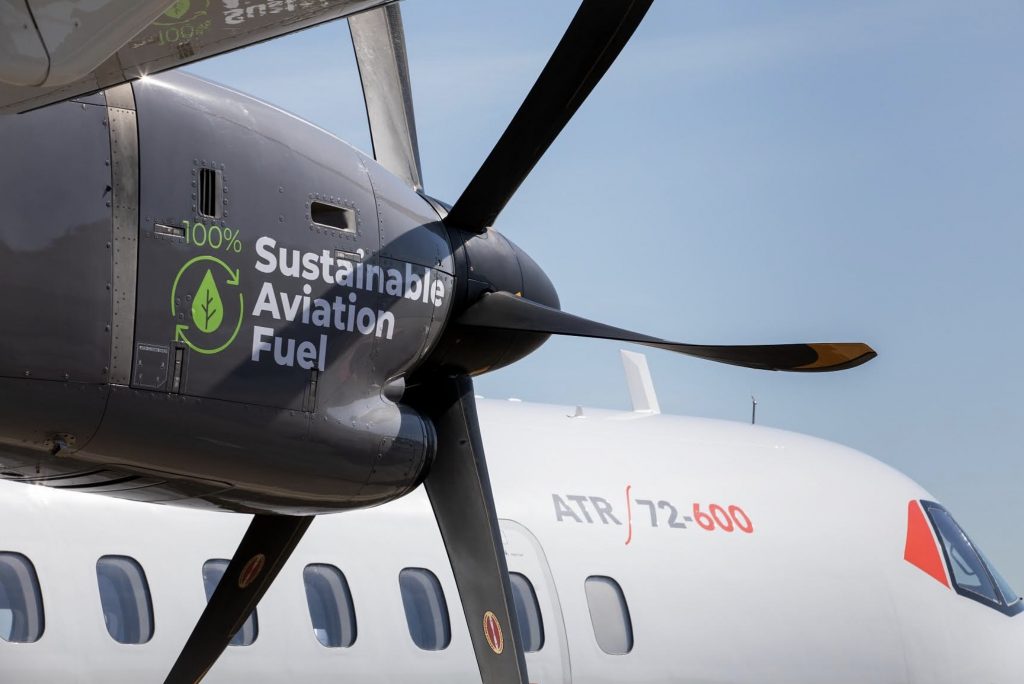
<p><a href="https://www.atr-aircraft.com/turboprop/">Turboprop</a> planes can literally land where a jet can’t. This is important when dealing with regional airports which can’t readily be adapted to jets.</p>
<!-- WP QUADS Content Ad Plugin v. 2.0.92 -->
<div class="quads-location quads-ad14936 " id="quads-ad14936" style="float:none;text-align:center;padding:0px 0 0px 0;" data-lazydelay="0">
<amp-ad 
 width="100vw" 
 height="320" 
 type="adsense" 
 data-ad-client="pub-4964358903113472" 
 data-ad-slot="3932419033" 
 data-auto-format="rspv" 
 data-full-width 
 > 
 <div overflow></div> 
 </amp-ad>
</div>

<ul>
<li aria-level="1">Lack of Space</li>
</ul>
<p>For many regional airports, it is impossible to make the runway longer. This is often for geographic reasons, such as surrounding mountains, bodies of water, or even the local town and farms.</p>
<ul>
<li aria-level="1">Low Funds</li>
</ul>
<p>Regional airports don’t tend to have access to the funds needed to build longer runways. To create additional funds they need more flights arriving and leaving. Of course, this isn’t possible with jets, but turboprops can handle the shorter runways, making them a viable solution.</p>
<h2>Assorted Routes</h2>
<p>When dealing with untested routes, airlines must proceed with caution. A single turboprop can allow them to test a variety of routes between various regional airports. All airports that jets are incapable of landing in.</p>
<!-- WP QUADS Content Ad Plugin v. 2.0.92 -->
<div class="quads-location quads-ad14936 " id="quads-ad14936" style="float:none;text-align:center;padding:0px 0 0px 0;" data-lazydelay="0">
<amp-ad 
 width="100vw" 
 height="320" 
 type="adsense" 
 data-ad-client="pub-4964358903113472" 
 data-ad-slot="3932419033" 
 data-auto-format="rspv" 
 data-full-width 
 > 
 <div overflow></div> 
 </amp-ad>
</div>

<p>By adopting this approach, an airline can establish which routes are viable and increase the size of their turboprop fleet to match.</p>
<p>The ability to offer different travel solutions helps regional airlines stand out and compete with the well-established industry giants.</p>
<h2>Better Functionality</h2>
<p>Turboprops are designed to fly in a variety of tough conditions, making them a better alternative to jets.</p>
<!-- WP QUADS Content Ad Plugin v. 2.0.92 -->
<div class="quads-location quads-ad14936 " id="quads-ad14936" style="float:none;text-align:center;padding:0px 0 0px 0;" data-lazydelay="0">
<amp-ad 
 width="100vw" 
 height="320" 
 type="adsense" 
 data-ad-client="pub-4964358903113472" 
 data-ad-slot="3932419033" 
 data-auto-format="rspv" 
 data-full-width 
 > 
 <div overflow></div> 
 </amp-ad>
</div>

<p>For example, ATR turboprops fly at lower altitudes than jets. At the same time, their engines can handle lower air pressure without losing boost – Jet planes lose performance when dealing with high altitudes and high temperatures.</p>
<p>In short, any airport sat at a high altitude, regardless of runway length, will be better served with turboprops than jets. They operate better in difficult conditions.</p>
<p>Of course, this is all alongside turboprops lower fuel use and reduced emissions on shorter flights. Both, significant bonuses over jets, and a major reason why more airlines are adding turboprops to their fleet.</p>
<!-- WP QUADS Content Ad Plugin v. 2.0.92 -->
<div class="quads-location quads-ad14936 " id="quads-ad14936" style="float:none;text-align:center;padding:0px 0 0px 0;" data-lazydelay="0">
<amp-ad 
 width="100vw" 
 height="320" 
 type="adsense" 
 data-ad-client="pub-4964358903113472" 
 data-ad-slot="3932419033" 
 data-auto-format="rspv" 
 data-full-width 
 > 
 <div overflow></div> 
 </amp-ad>
</div>


Turboprops and operational flexibility: flying where jets can’t
Screenshot