<!-- WP QUADS Content Ad Plugin v. 2.0.92 -->
<div class="quads-location quads-ad15875 " id="quads-ad15875" style="float:none;text-align:center;padding:0px 0 0px 0;" data-lazydelay="0">
<amp-ad 
 width="100vw" 
 height="320" 
 type="adsense" 
 data-ad-client="ca-pub-4964358903113472" 
 data-ad-slot="7296948979" 
 data-auto-format="rspv" 
 data-full-width 
 > 
 <div overflow></div> 
 </amp-ad>
</div>
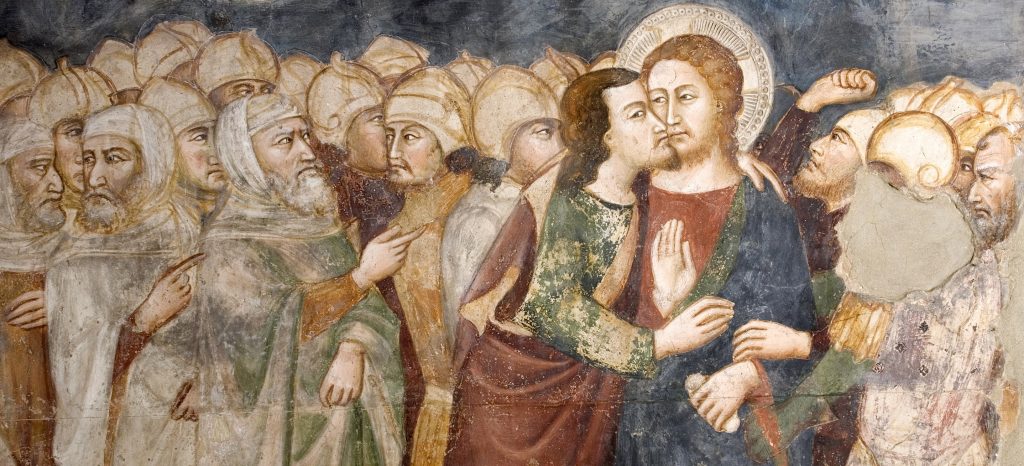
<p>The story of Judas Iscariot, the one who betrayed Jesus Christ, is one of the most famous tales in biblical history. But the question that vexes many is: <strong>how did Judas Iscariot die?</strong> The accounts of his death are shrouded in mystery, with two different versions presented in the New Testament.</p>
<p> ;</p>
<h2>Biblical Accounts of Judas Iscariot&#8217;s Death</h2>
<h3>Matthew&#8217;s Narrative</h3>
<p>According to Matthew 27:3-10, Judas, filled with remorse following Jesus&#8217; condemnation, returned the thirty pieces of silver he received for his betrayal. Unable to bear the guilt, he hanged himself. The chief priests, deeming the silver inappropriate for the temple treasury due to its association with bloodshed, used it to purchase a field for the burial of foreigners. This place was henceforth known as the Field of Blood.</p>
<h3>Luke&#8217;s Description in Acts</h3>
<p>However, in Acts 1:18, Luke presents a different scenario. This account suggests that Judas used his ill-gained reward to acquire a field. However, in a ghastly turn of events, he fell headlong in this field, resulting in his body rupturing, causing his internal organs to spill out. The gruesome nature of his death led to the field being named Akeldama, or Field of Blood.</p>
<!-- WP QUADS Content Ad Plugin v. 2.0.92 -->
<div class="quads-location quads-ad14936 " id="quads-ad14936" style="float:none;text-align:center;padding:0px 0 0px 0;" data-lazydelay="0">
<amp-ad 
 width="100vw" 
 height="320" 
 type="adsense" 
 data-ad-client="pub-4964358903113472" 
 data-ad-slot="3932419033" 
 data-auto-format="rspv" 
 data-full-width 
 > 
 <div overflow></div> 
 </amp-ad>
</div>

<h2>Reconciling the Two Narratives</h2>
<p>Given the apparent discrepancy between these accounts, one might wonder, &#8220;how did Judas Iscariot die indeed?&#8221; However, these narratives are not necessarily contradictory but might be two perspectives of the same event.</p>
<h3>The Theory of Simultaneous Events</h3>
<p>One plausible explanation is that Judas hanged himself, as told by Matthew. Then, after his body had started to decompose and bloat, the rope or the tree branch snapped, causing his body to fall. The impact, combined with the decomposition, might have caused his body to rupture, as described by Luke in Acts.</p>
<h3>The Field of Blood: A Common Element</h3>
<p>Interestingly, despite the divergent descriptions of Judas Iscariot&#8217;s death, both narratives converge on one detail. They both refer to the place associated with his death as the Field of Blood. Whether it implies the blood money used to purchase it, the gruesome nature of Judas&#8217;s death, or the blood of the betrayed Jesus, it serves as a chilling reminder of Judas&#8217;s eternal legacy.</p>
<!-- WP QUADS Content Ad Plugin v. 2.0.92 -->
<div class="quads-location quads-ad14936 " id="quads-ad14936" style="float:none;text-align:center;padding:0px 0 0px 0;" data-lazydelay="0">
<amp-ad 
 width="100vw" 
 height="320" 
 type="adsense" 
 data-ad-client="pub-4964358903113472" 
 data-ad-slot="3932419033" 
 data-auto-format="rspv" 
 data-full-width 
 > 
 <div overflow></div> 
 </amp-ad>
</div>

<h2>The Role of Judas Iscariot in Biblical Narration</h2>
<h3>The Betrayer of Christ</h3>
<p>Judas Iscariot holds a pivotal role in the narrative of Jesus Christ&#8217;s life and death. He was one of the twelve apostles chosen by Jesus. However, his name has been forever tarnished as the apostle who betrayed his master. His act of betrayal, handing over Jesus to the Romans for thirty pieces of silver, led to the crucifixion of Christ.</p>
<h3>The Regret and Remorse</h3>
<p>The scriptures depict Judas as a figure filled with regret after his betrayal. Matthew describes him as someone who, unable to bear the guilt of his actions, tried to return the blood money and ultimately ended his life.</p>
<h2>The Legacy of Judas Iscariot</h2>
<p>Despite his infamy, Judas Iscariot&#8217;s story serves as a powerful narrative about remorse, guilt, and the consequences of betrayal. His life and death have been the subject of numerous theological discussions and literary interpretations. His death, in particular, is seen as a fitting end to a life marred by the ultimate act of treachery. Regardless of the exact circumstances of how Judas Iscariot died, his tale remains a potent reminder of the severe implications of betrayal and deceit.</p>
<!-- WP QUADS Content Ad Plugin v. 2.0.92 -->
<div class="quads-location quads-ad14936 " id="quads-ad14936" style="float:none;text-align:center;padding:0px 0 0px 0;" data-lazydelay="0">
<amp-ad 
 width="100vw" 
 height="320" 
 type="adsense" 
 data-ad-client="pub-4964358903113472" 
 data-ad-slot="3932419033" 
 data-auto-format="rspv" 
 data-full-width 
 > 
 <div overflow></div> 
 </amp-ad>
</div>

<h2>Conclusion</h2>
<p>The question of how did Judas Iscariot die might never have a definitive answer due to the varying accounts in the scriptures. Whether he died by hanging himself out of guilt or his body ruptured after falling in a field, the essence of his story remains unchanged. It&#8217;s a chilling tale of betrayal, guilt, and the harsh consequences that followed, forever echoing in the annals of biblical history.</p>


The Enigma of Judas Iscariot’s Demise